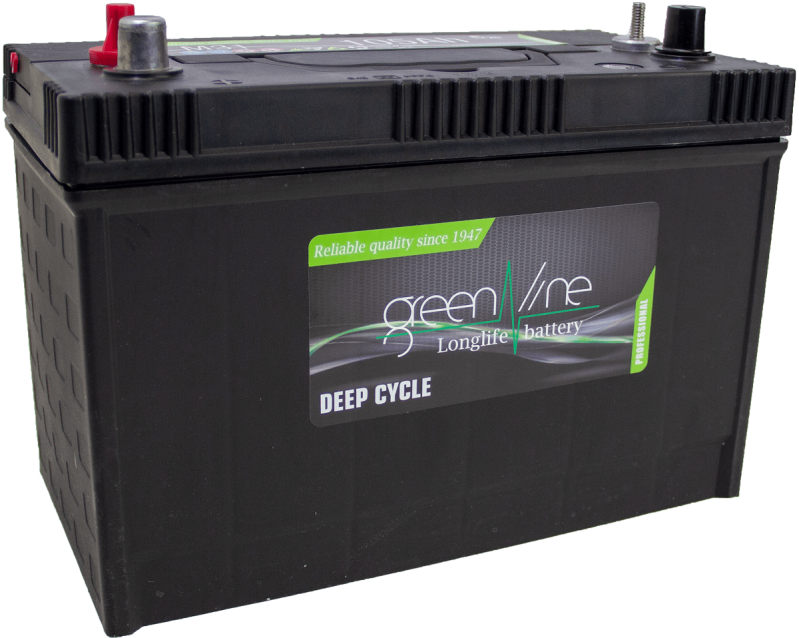
When we bought our Eriba, a Reich mover was included. A lead-acid battery had been installed for power. The downside was that the 25-kilo monster had to be removed every year to be connected to a charger during the winter. We found a second hand Reich MPP (Mobility Power Pack). The advantage: weight is one tenth, takes less space, with a much longer lifespan. This also means extra storage space. And most important, no more need to remove it from the caravan every year.
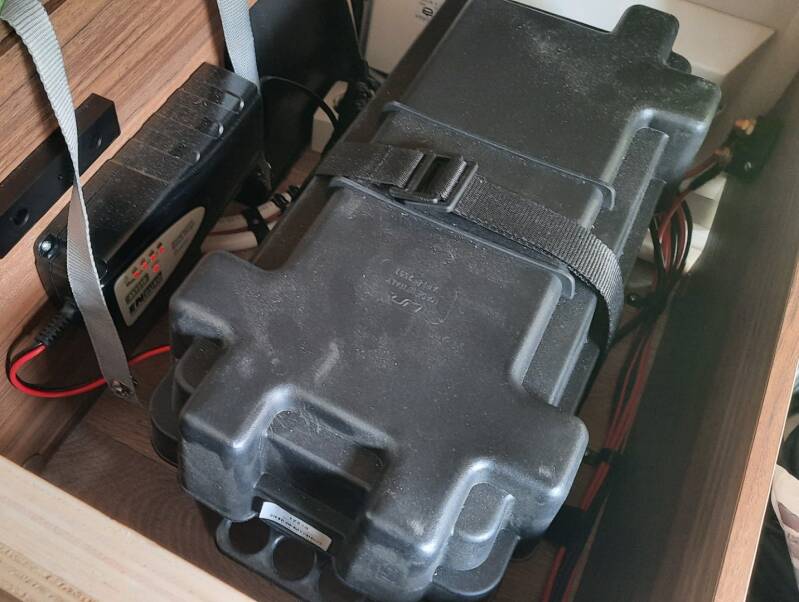
So first, the old battery and charger are removed. (The battery is in a plastic container, see photo above.) Then we mount the MPP and securely tighten the 12V= cables to the battery terminals. The photo on the right shows the bulky old on/off switch (with the red tab), which we can bypass.
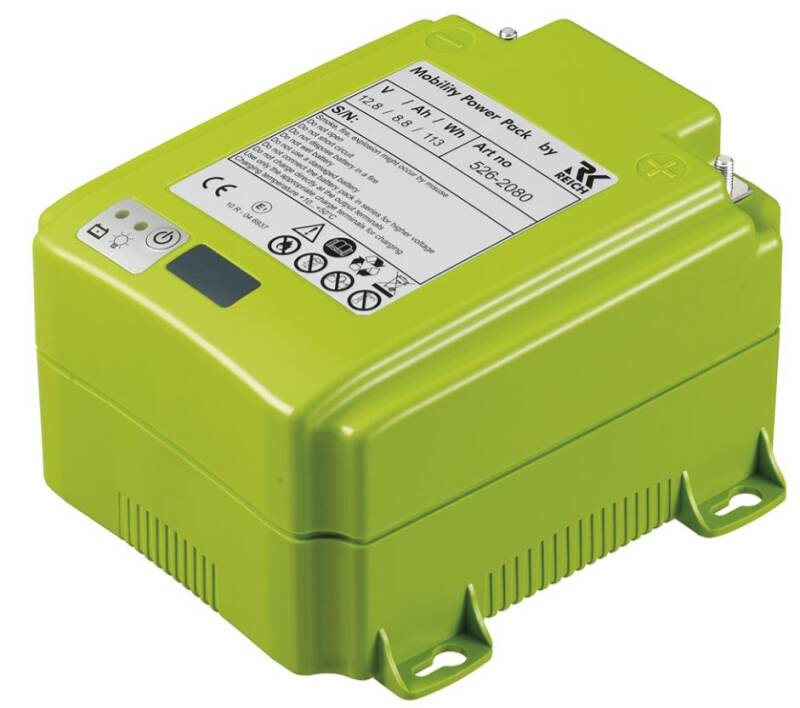
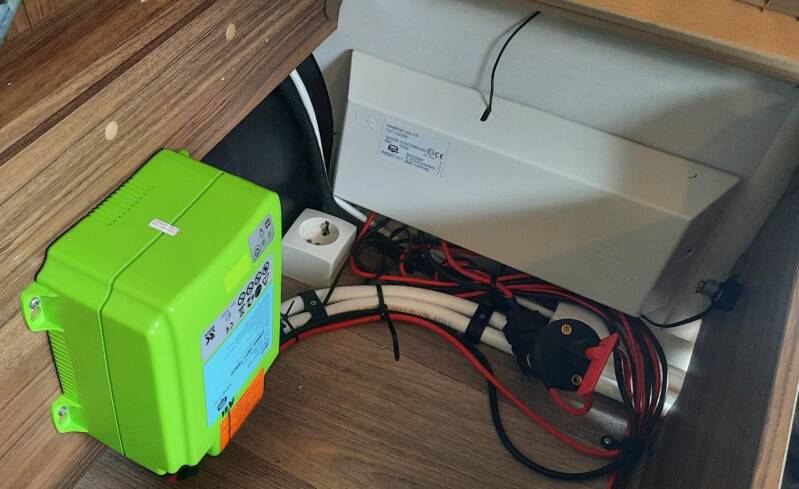
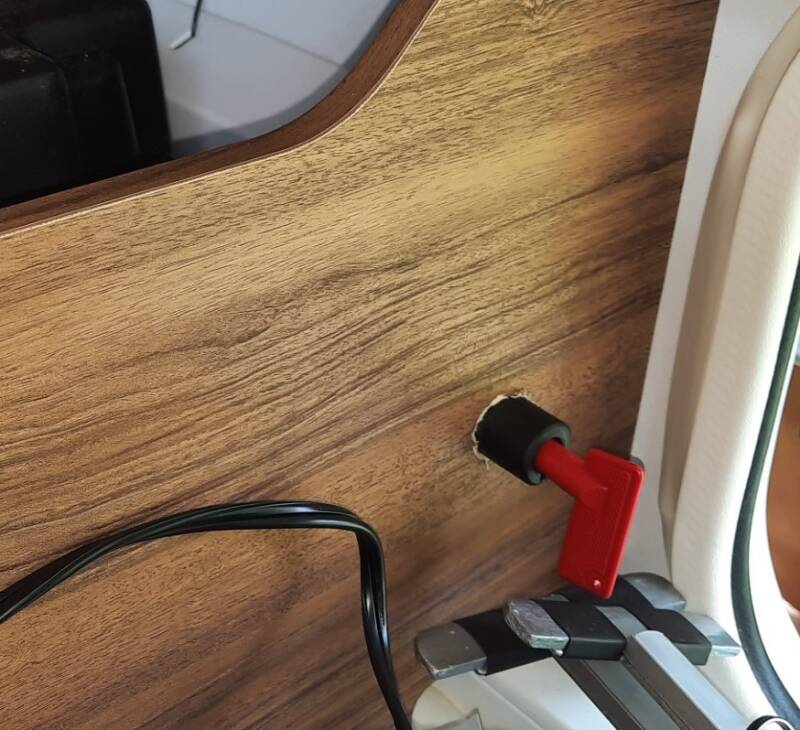
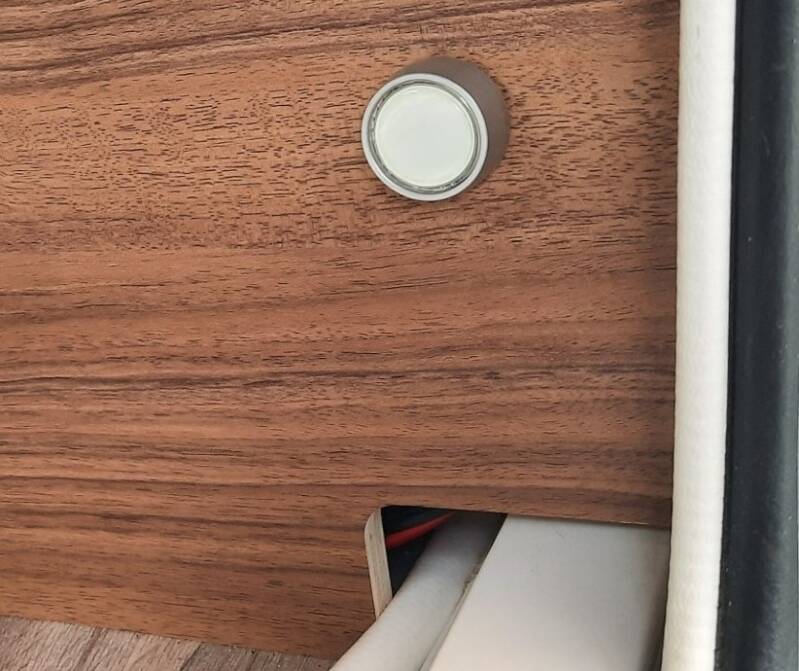
The large red on/off switch has now been replaced by a push button (from an elevator). This momentary switch turns the MPP on, which turns off automatically after fifteen minutes. This is convenient: after moving, you simply drive away without having to switch of the mover system. The photo on the left shows the old switch, which the dealer had fumbled in, and our elevator button on the right.
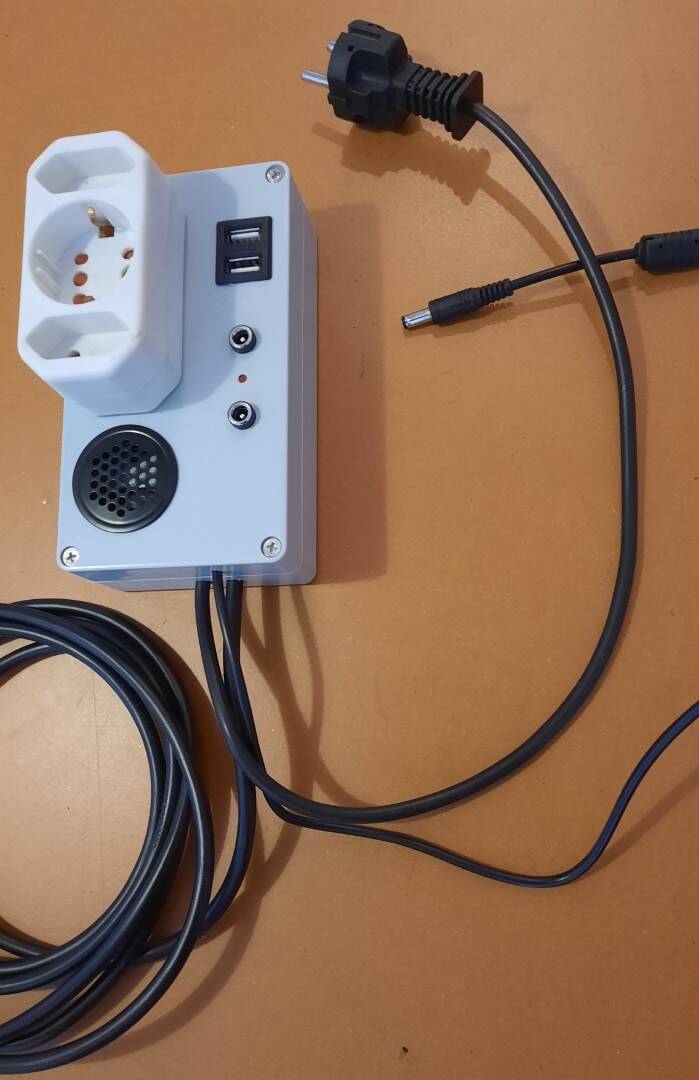
While working at it... We're going to tackle that entire compartment. A better switched-mode 12V= power supply will be installed for charging the MPP. This power supply is also for the refrigerator fans (see there). The USB port is for charging LiPo batteries that power an alarm.
This will be connected to the existing wall socket on the floor (where the former MPP adapter was located). From there, 230V will also be fed to two additional wall sockets in the bench. These can be used for electric underblankets, for example.
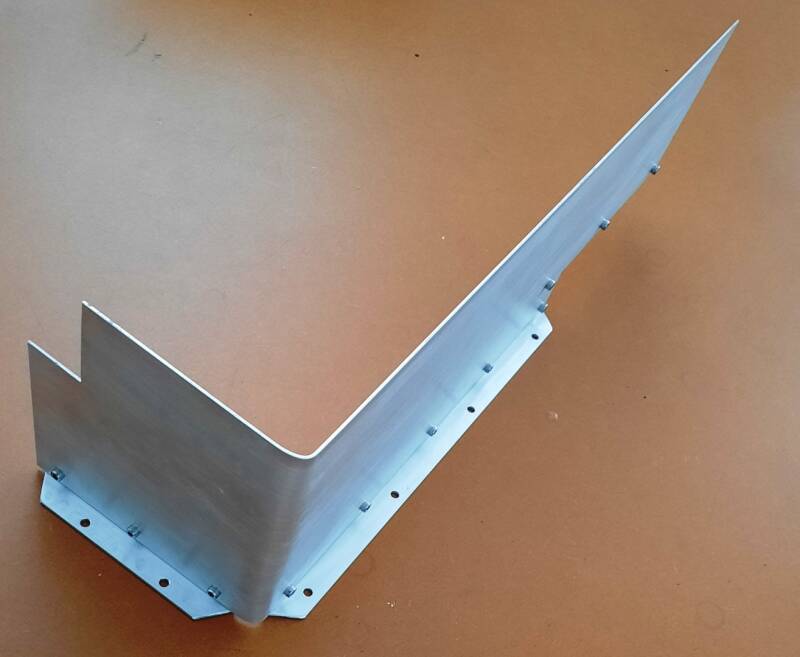
We also bend a separation that will later go around the MPP and the new 12VDC power supply. This will physically protect the MPP electrical connections.
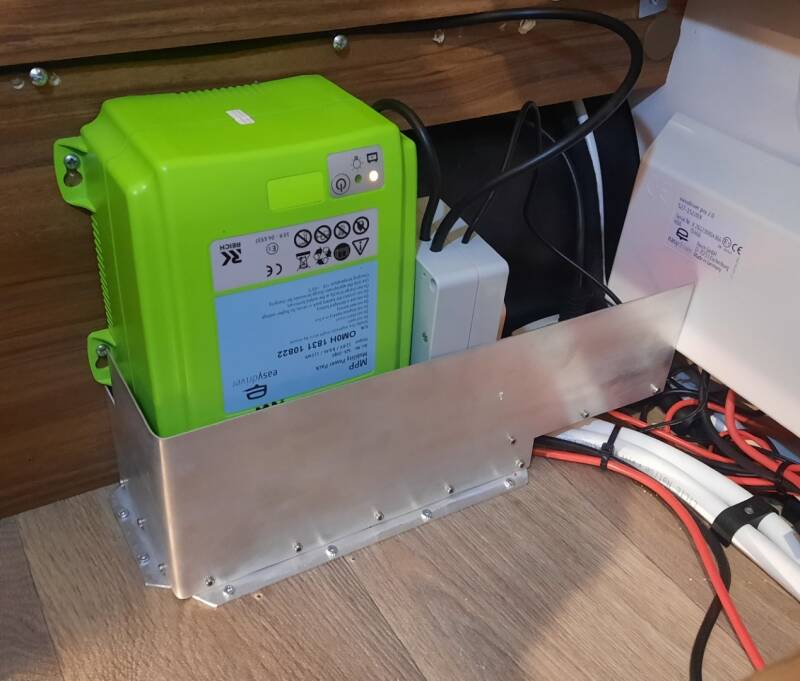
Protective separation installed. Next to the MPP is the power supply box, with, among other things, the cord at the top leading to two new wall sockets at the front of the bench seat.
We would later build a higher separation out of wood. The reason for this was to make the compartment accessible from the storage shutter on the outside. See photos elsewhere on the website.

Afterword. The Reich mover's remote control isn't working perfectly, and we're afraid we'll forget it one time... So, we paired the Bluetooth unit and installed the app on our phone... At first, we stuck the Bluetooth "antenna" to the plastic wheel arch, but then the connection sometimes wouldn't work. Now it's "hidden" in the cable duct that runs behind the luggage hatch at the front.


But in fact the distance of this Bluetooth handling is too short. Walk around the caravan and connection is being disrupted...
Comments and questions:
Loek L: We’ve finally got our Eriba Touring 642 (after a year-long wait). It’s an "Autark" (self-sufficient) model, which comes standard with a heavy AGM battery; I’d like to swap that out directly for a lithium battery, mainly for the sake of weight and ease of handling. Is that feasible with the existing Schaudt Lippert CSV 417 charging controller? Answer: Sorry, @Loek, we can only answer questions based on our own experience. That said, we do know that you generally can't just charge a LiPo battery using a standard lead-acid battery charger. Your Schaudt power supply might have a specific setting for this, but you’d need to check the specs yourself. Schaudt does offer a dedicated controller for charging via solar panels (MPP), which apparently outputs a steady charging voltage of around 14V DC.
To be honest, I’ve never quite understood the whole "Autark" concept. Solar panels on a house roof work continuously as long as there’s sunlight, but what’s the yield for a caravan that sits in storage for months on end? Electric cooking and heating, an absorption fridge, a small oven—in terms of power consumption, none of that is really viable with just a battery and a solar panel. So, does "self-sufficient" mainly mean burning through loads of fossil gas instead of using the campsite’s electrical hookup?
Yapke: Why was that red switch removed? And why replace it with a push-button? Answer: You’re right, @Yapke; I should have phrased that better. The red power switch was removed because it no longer serves a purpose with the MPP unit. The MPP switches itself off after fifteen minutes. The push-button is wired differently, though: it simply triggers the MPP to turn on temporarily. So, the red switch needs to handle 100A, while the push-button handles 2mA.
Harry: Hi M. & A. You’re doing a great job. Interesting projects you’re working on. I’d love to know more about the mover and the battery—model type, and so on. Answer: Thanks, @Harry. The mover is a Reich Easydriver Pro 2.0. The old battery was a 115Ah lead-acid battery weighing over 23 kg. The 'new' battery is a lithium-ion unit with an integrated charger, known as the Reich Mobility Power Pack (MPP). (It weighs just over two kilograms; fully charging it with a small 12V/1A adapter takes about 16 hours.) (Purchased second hand.)
Sleurhut_Suus: We find the Reich Mover remote control very unreliable. It cuts out intermittently, so it doesn't work consistently for the full fifteen minutes. Maybe there’s some interference? Apparently, there’s also a Bluetooth control option via an app. Would that work better? Answer: You’ve got a point there; our mover sometimes stops unexpectedly, too. No idea why. We just switch the remote off and back on again, and it usually works fine after that. Still, it is annoying at times. In short: we’re considering the Bluetooth option too, but before spending over 100 euros, we want to see if the ferrite core we’ve added to the 12V DC power supply helps with interference suppression. It’s worth a try.
Maak jouw eigen website met JouwWeb