We explored several options for the awning—for instance, a custom design that extended further alongside the door, or adapting the existing Dometic awning by adding an extra keder strip (see the bottom of this page).
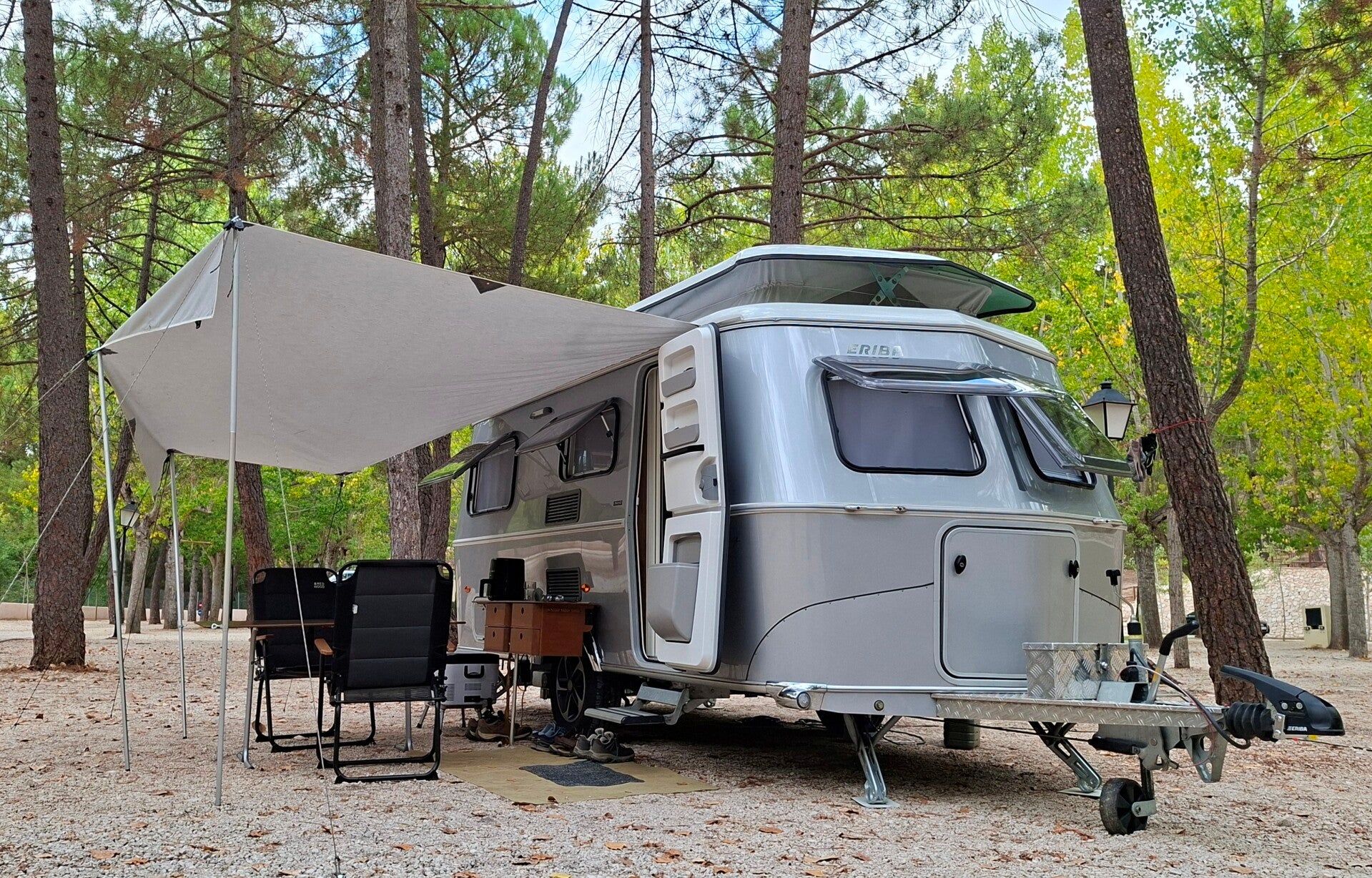
For now, we have opted for a simple awning: the Grado, made by the brand Reda. However, there is room for improvement. Firstly, it only has five attachment points (see photo), which limits the options for positioning poles. Secondly, the keder strip is too thin, causing it to easily pull out of the rail at the corners. Finally, the awning arrived with two broken attachment points at the corners.
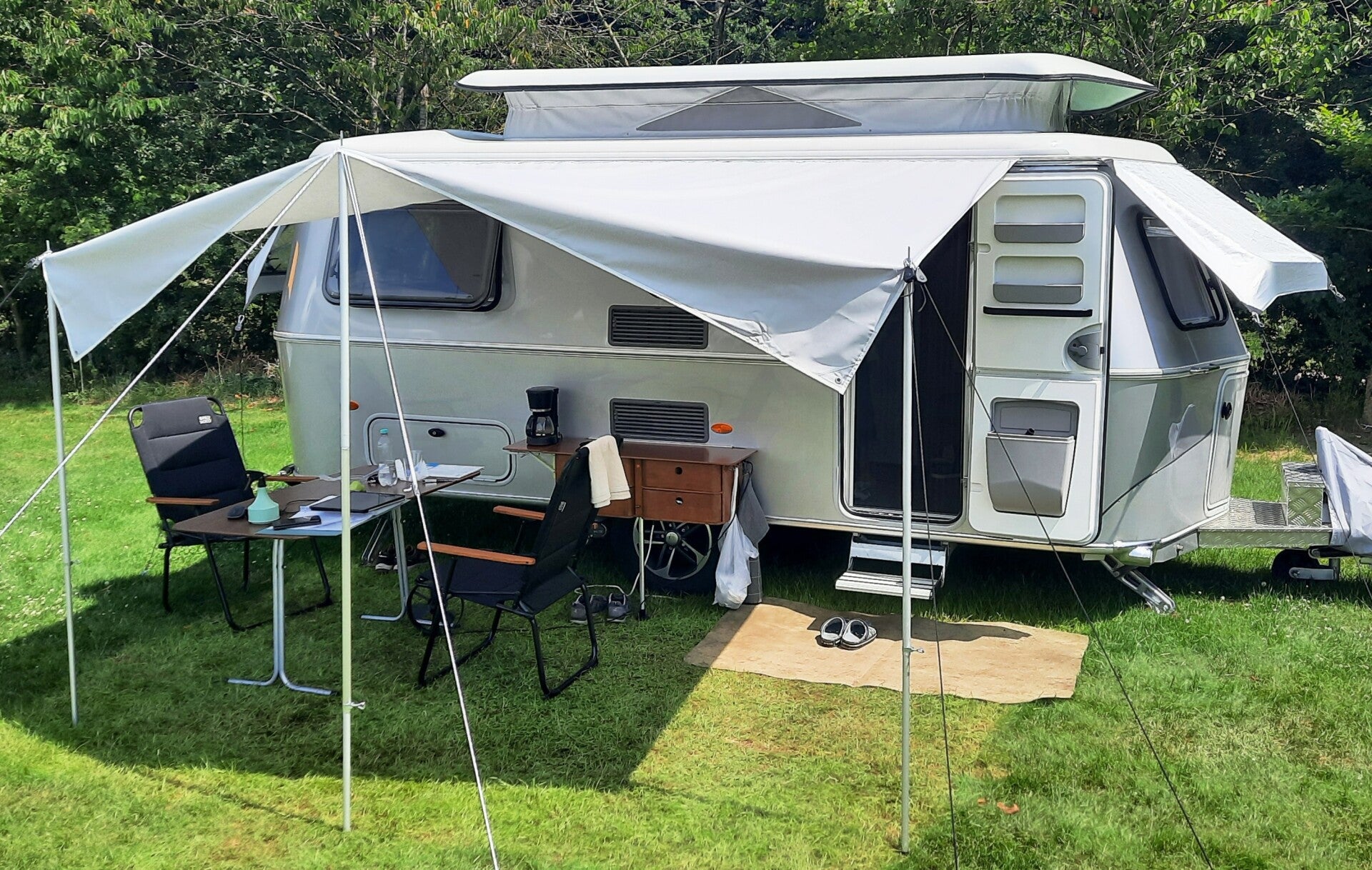
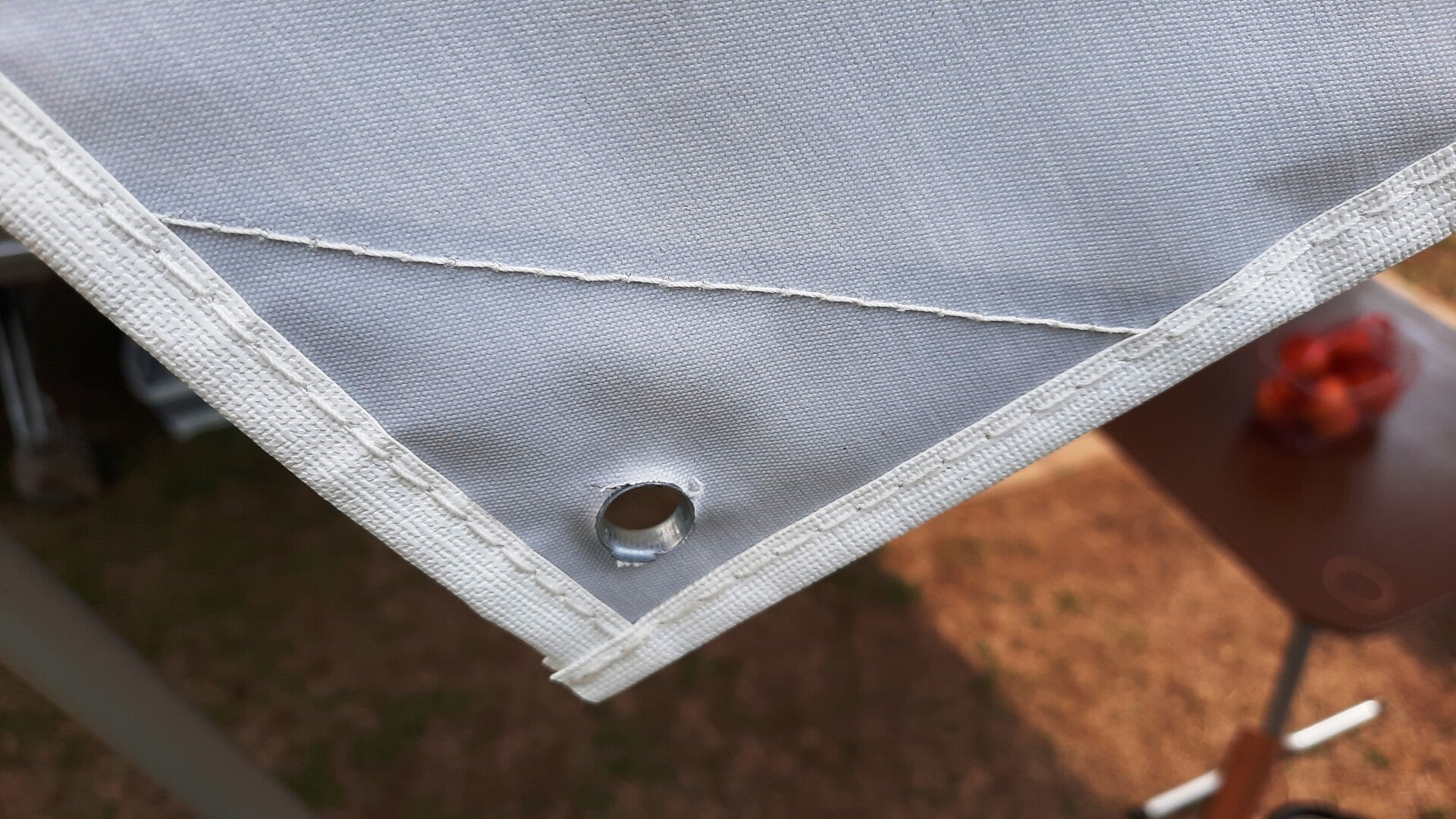
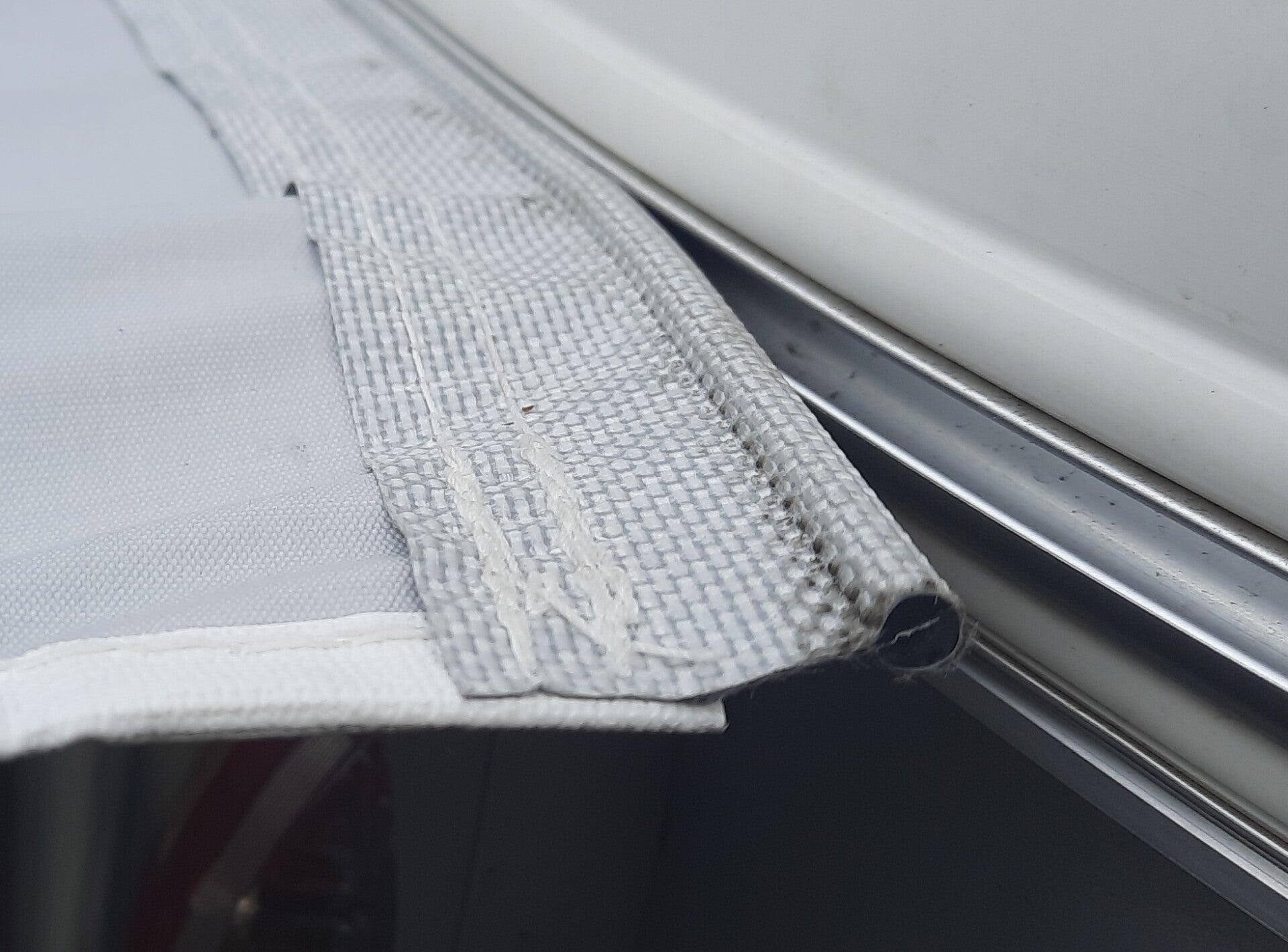
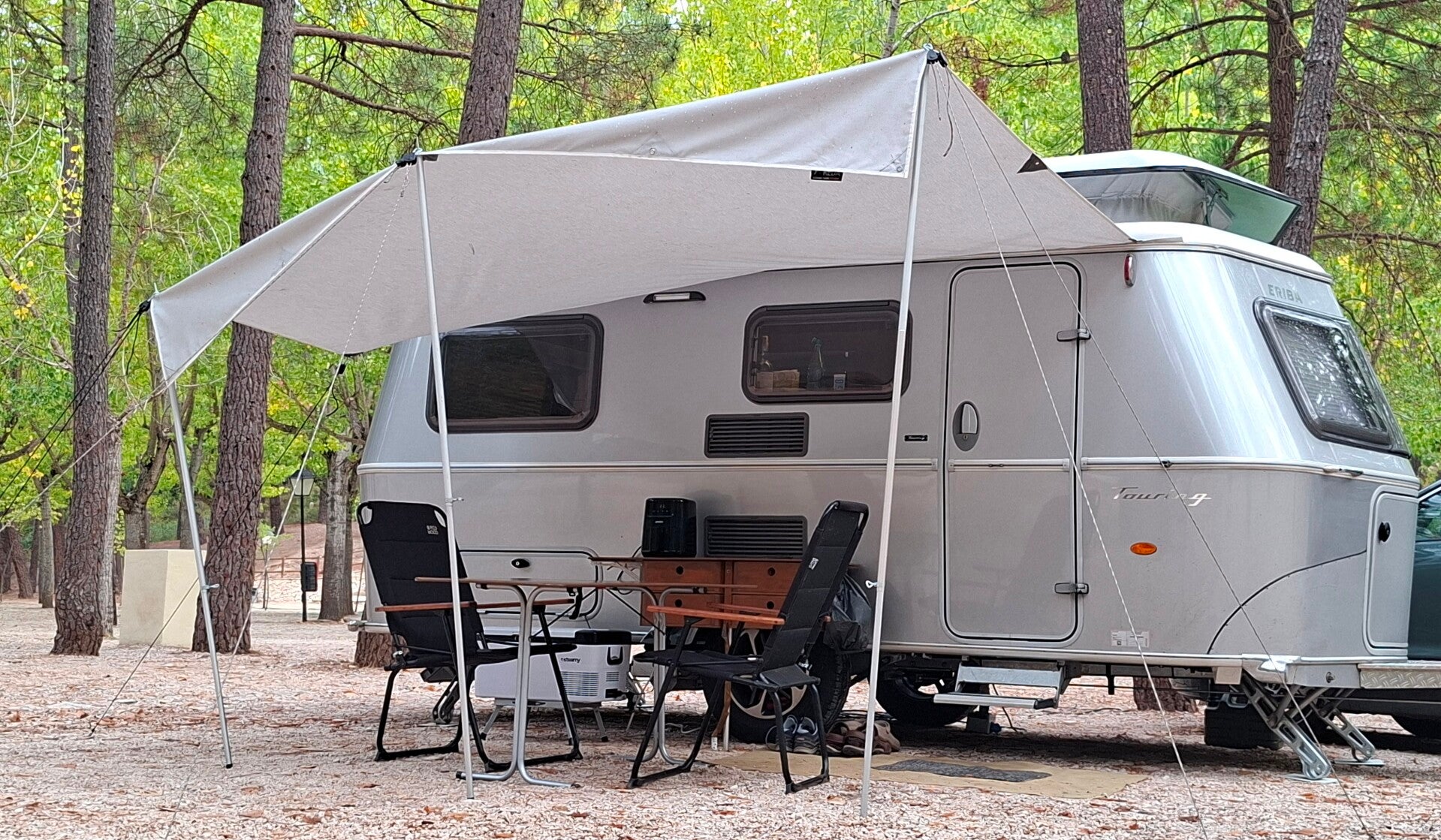
The broken eyelets are the reason why the Reda awning in the first photo has no poles at the corners. The new (!) awning had to be taken back home first so it could be repaired. We replaced the broken eyelets and added some extra ones. Also, we had to come up with a solution for the thin keder that kept slipping out of the awning rail.
The keder on the REDA awning is too thin, which causes it to pull out of the rail at the corners. Initially, we used separate sections of thicker keder at the corners, attached to the awning’s loops with Velcro. Later, we sewed keder of the correct thickness directly onto it.
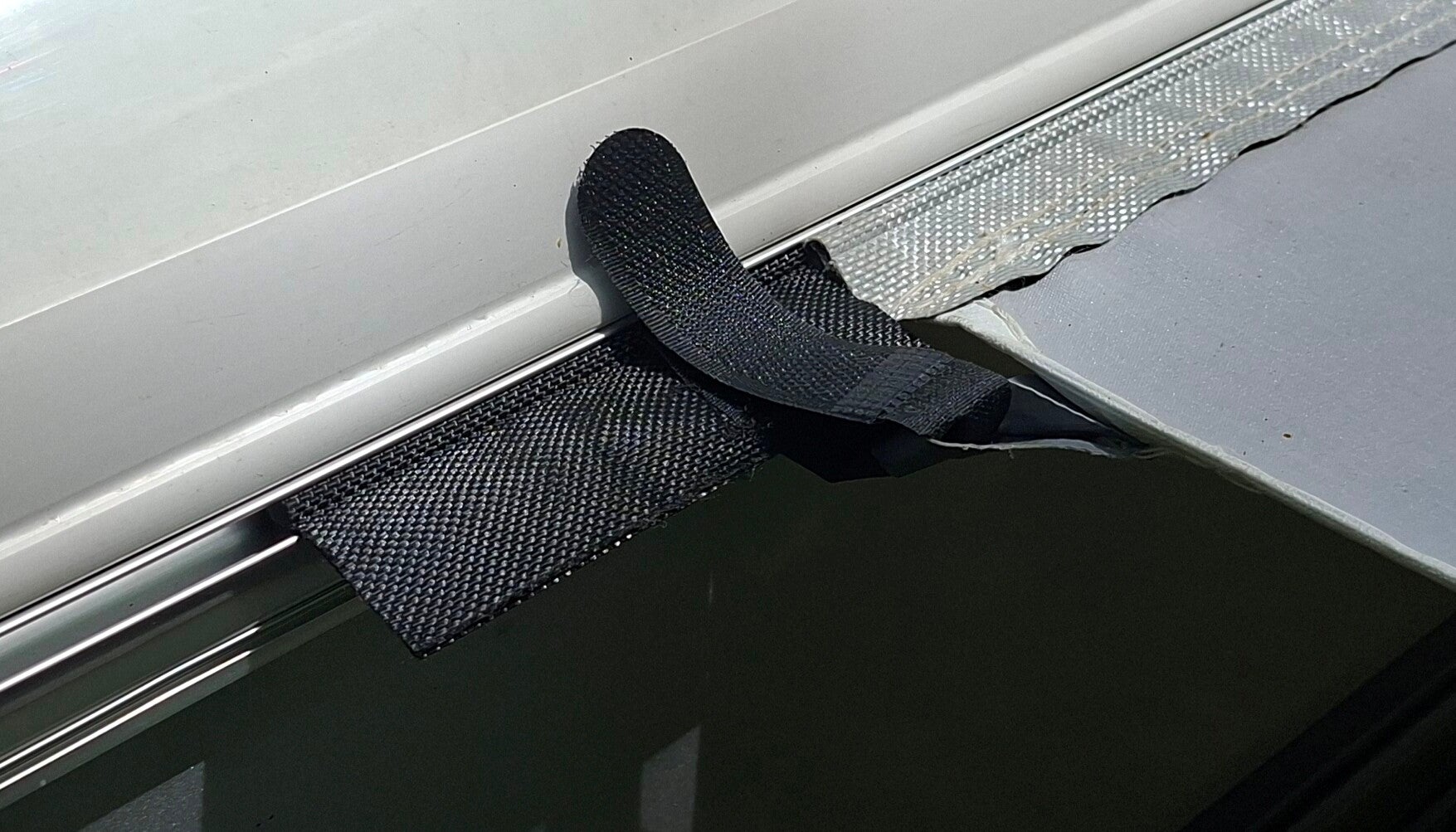
Inserting an extra piece of piping strip with correct thickness and securing it with Velcro. Nice idea, but too weak.
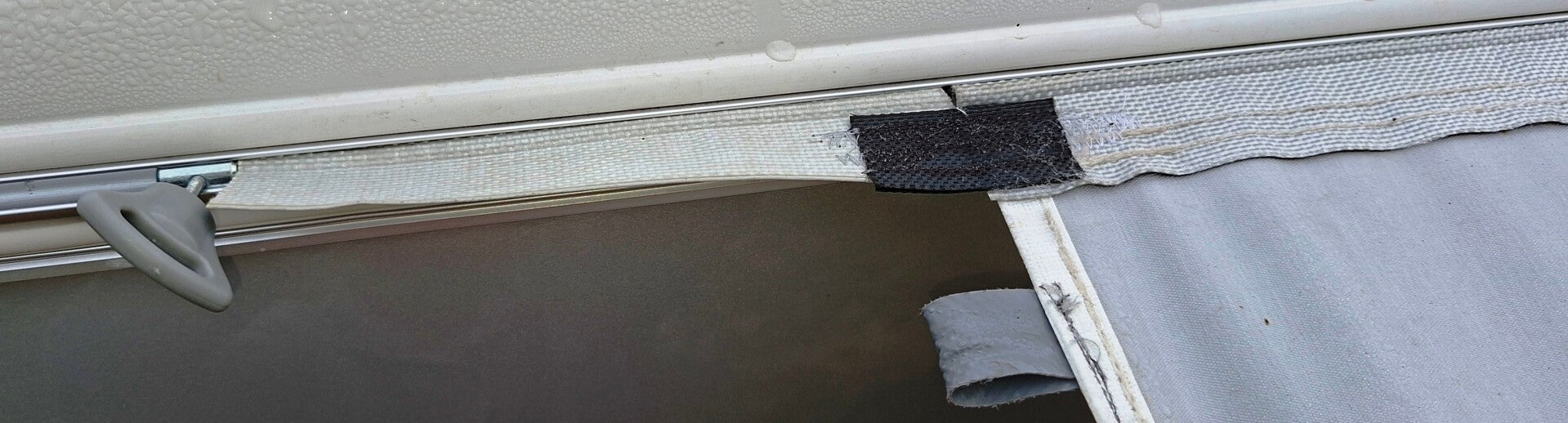
The only effective way to make the REDA Grado awning usable is to sew on a section of piping (keder) of the correct thickness. This allows you to tension the awning tightly without it pulling out of the rail. We also use rail stoppers...
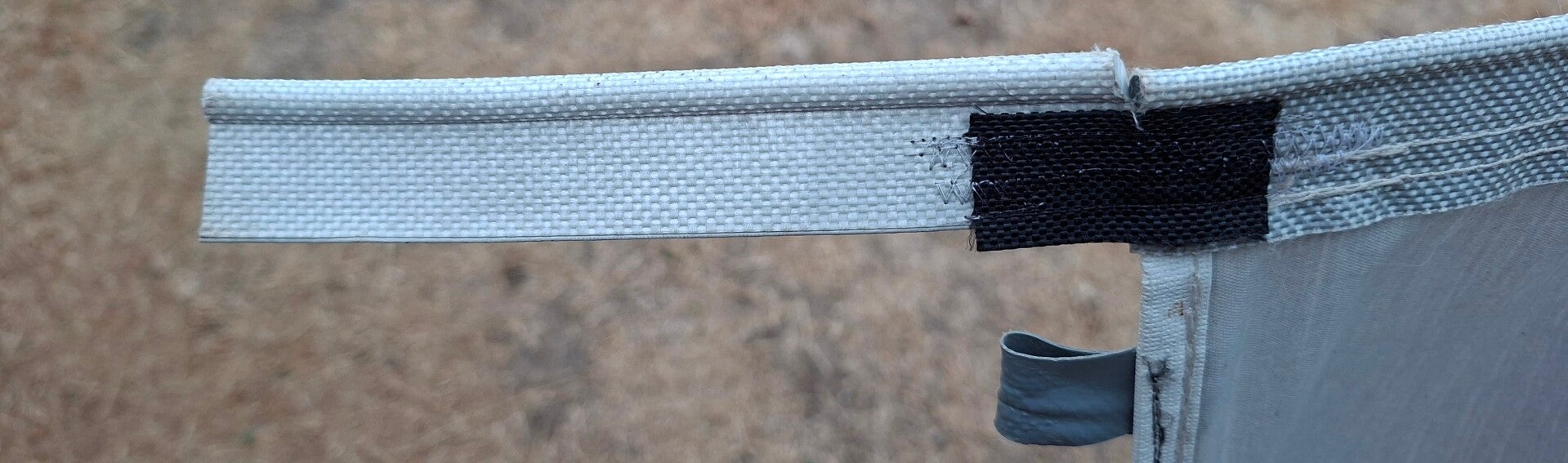
Just one more photo to clearly show the difference in keder (piping) thickness. Thanks to the pieces sewn onto the corners, the awning now stays securely in place. An advantage of the thinner keder is that it makes the whole thing very easy to slide through the rail...
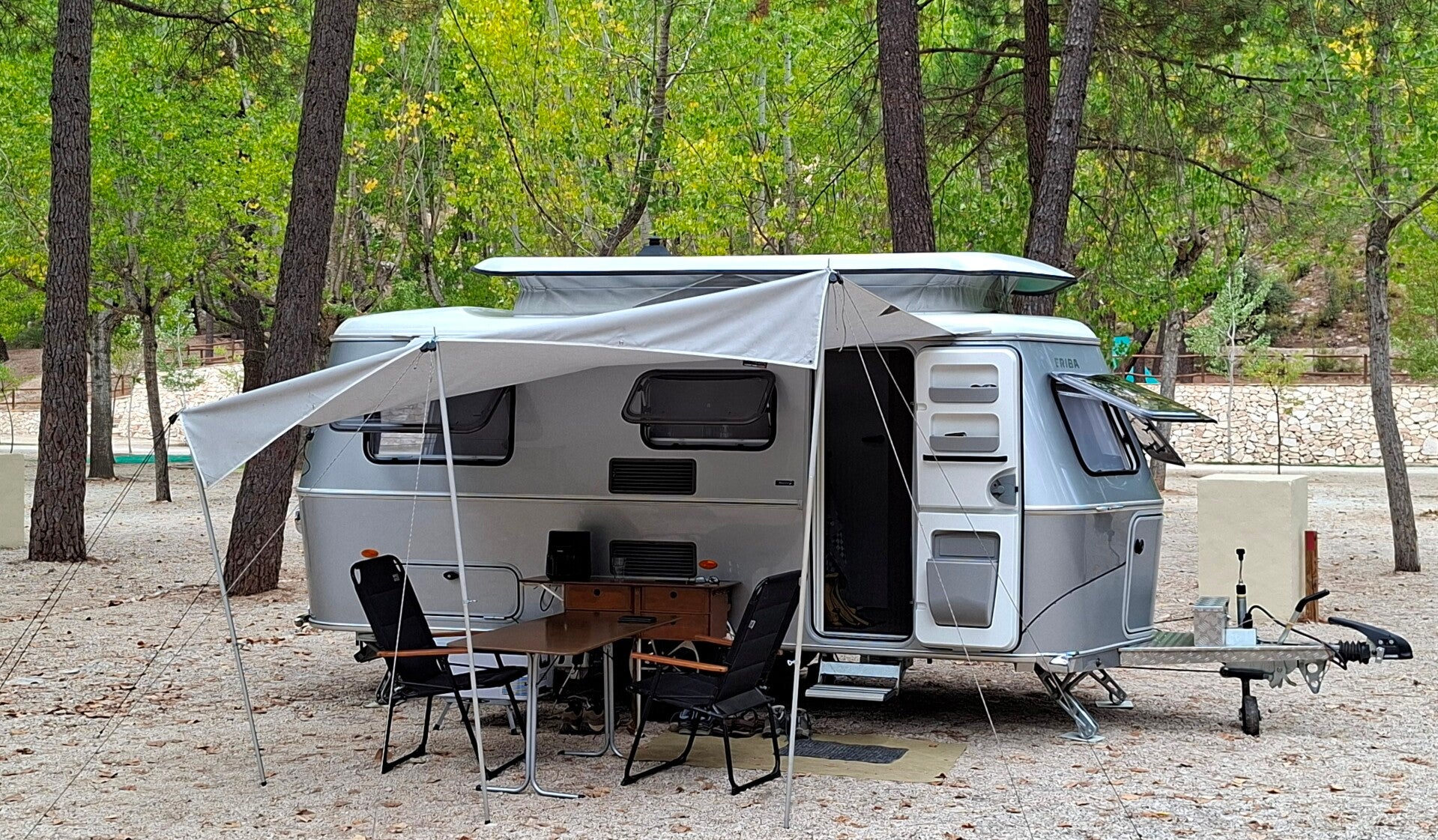
The Reda awning in use is shown below. Additional eyelets, reinforced with triangular patches, have been incorporated. The awning now remains securely in the rail, thanks to the sections of thicker piping (keder) that have been sewn on. You can also see that the pole heights vary; on the right, the pole is positioned high enough to allow the door to open and close, while on the left, we pull the awning down to a point to ensure proper water drainage (using an extra eyelet!).
Comments and questions:
Adelheid_M: Would you advise against the REDA awning, or would you recommend it? Answer: We believe REDA is a good company that engages with its customers and offers solutions. (See online reviews.) The fact that two of the eyelets on ours weren’t crimped properly is likely an exception. However, the thickness of the keder (awning piping) remains a point of concern: it is too thin for Eriba caravans. By sewing thicker sections of keder onto the corners, we’ve achieved the "best of both worlds": the awning slides very smoothly into the rail during setup, while still staying securely in place once tensioned.
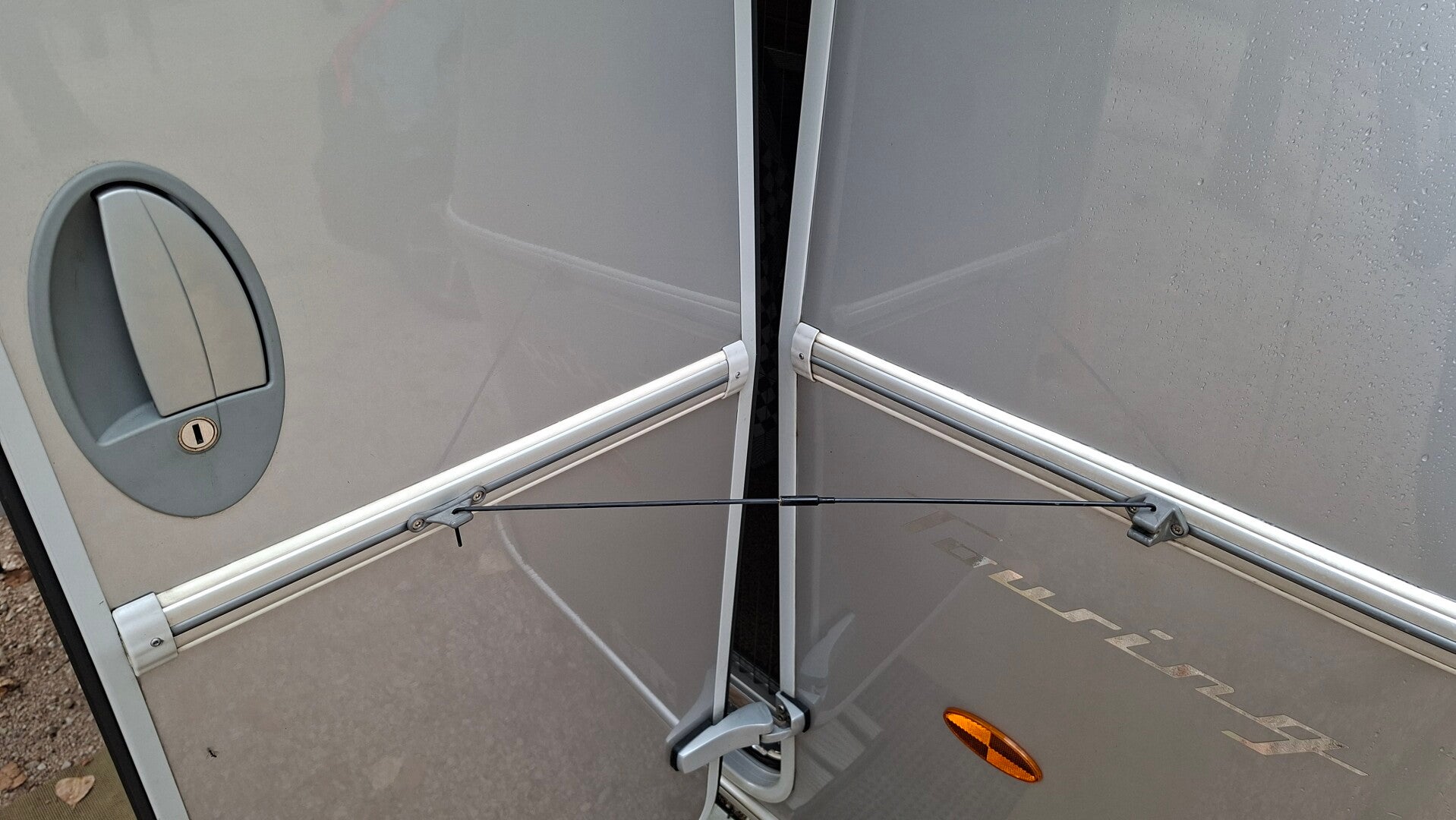
Dirkje_K: In your pictures, the open door extends well out from under the awning. The awning cannot be positioned any further to the right due to the curve of the caravan. So how do you prevent rain from getting in through the door? Answer: We have created a rod (see elsewhere on this website), consisting of two screw-together sections. This allows the door to be held at a right angle under the awning when it rains.
Reviaan: What kind of poles do you use for that awning? Answer: Just standard aluminium poles. An inexpensive set that includes two regular poles and one that can be extended (for the side by the door). All the poles are stored in the "pole compartment" at the rear, underneath the caravan. (See ## link)

Afterword: an earlier attempt...
An option? The Dometic awning fits the annex perfectly. But could we also use that awning without the annex?
To do so, an additional piping strip (keder) is needed for attachment to the caravan. The awning’s zipper follows a curved line, whereas the keder must follow a straight line. Furthermore, the awning poles need to be longer.

So, a straight keder has been sewn onto the underside of the awning. (If it were attached at the top, the side flaps would end up hanging in front of the door. Now they simply rest loosely on top.)
Reslut in practice? It’s only a small awning, and the poles have to be extremely long if the door is still to be opened and closed. The fact that the awning slopes backward also leaves us concerned about potential leaks when it rains - we’d like to keep the exterior storage unit dry. Conclusion: a nice try, but not useful.

Comments ans questions:
Harry:How did you handle the curved zipper and the straight awning piping (keder) on the canopy? Can the canopy still be zipped onto the main awning? Answer: The (curved) zipper is a standard feature and still allows it to be zipped onto the main awning. We only added the straight keder, which is used for attaching it to the caravan. In the latter case, an extension pole is required on the door side to account for the necessary height difference. (And looks quite quirky...)
Maak jouw eigen website met JouwWeb